The value of flossing
Brushing teeth correctly and regularly helps remove most dental plaque. But brushing alone can't remove plaque found in places that a toothbrush can't reach, such as between teeth and under the gums. Besides removing plaque, flossing also helps:
-
Remove debris between the teeth and under the gums.
-
Polish tooth surfaces.
-
Control bad breath.
For flossing to work the best, floss at least once a day.
What type of floss is best?
It doesn't matter what type of dental floss you use because the benefits are the same. The different types of dental floss include:
-
Waxed and unwaxed.
-
Flavored and unflavored.
-
Wide and regular.
-
Textured and smooth.
Flossing methods for adults
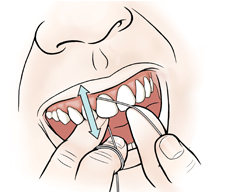
You can floss your teeth before or after brushing. The most important thing is that you floss regularly. Pick a time of day that you are most likely to remember to floss and make it a daily habit. Your dentist or other dental care provider can show you how to do another flossing method. In general, dentists advise the following steps:
-
Cut off a piece of floss about 18 to 20 inches in length.
-
Lightly wrap each side of the piece of floss several times around each middle finger.
-
Next, carefully move the floss in between the teeth with your index fingers and thumbs in an up and down, not side-to-side, motion.
-
It is best to bring the floss up and down, making sure to go below the gum line, bending it to form a "C" on the side of each tooth. Don't forget the back side of your last back tooth.
-
Throw the used floss away. Don't reuse it.
Other flossing methods
Flossing tools, such as a prethreaded flosser or floss holder may be helpful for people who are just learning how to floss. They may also help people with limited ability in their arms or hands, or people who are flossing the teeth of someone else (such as a child or disabled person).
Oral irrigators are not a substitute for tooth brushing and flossing. These devices may help clean around braces that hold on to food or in areas a toothbrush can't reach. But they don't remove plaque that contains harmful bacteria. Ask your dentist for advice if you or your family members have special adaptive needs.
Online Medical Reviewer: Jessica Gotwals RN BSN MPH
Online Medical Reviewer: Michael Kapner MD
Online Medical Reviewer: Rita Sather RN
Date Last Reviewed: 05/01/2025
© 2000-2026 The StayWell Company, LLC. All rights reserved. This information is not intended as a substitute for professional medical care. Always follow your healthcare professional's instructions.
Learn More About Health Services at PIH Health
Expert care for every stage of life. Explore the comprehensive services offered at PIH Health.
Explore Services
Get Health Tips & Updates
Sign up for helpful health information, wellness tips and news from PIH Health, delivered straight to your inbox.
SubscribeRelated Articles
Understanding Jaw (Orthognathic) Surgery
Jaw (orthognathic) surgery is treatment that reshapes the jaws to improve their form and function.
Herbst Appliance
The Herbst appliance is used to help line up your top and bottom jaws to improve your bite.
Understanding Canker Sores
Canker sores are small, painful sores inside the mouth. They occur most often on the tongue, gums, or insides of the cheeks.
Candida Infection: Thrush
Thrush is a type of fungal infection. Read on to learn about symptoms, diagnosis, and treatment.

Personalized Care Starts with the Right Provider
Search by specialty, location, and more.
Find A Doctor
Make an Appointment
Your health can't always wait. Schedule an appointment with a PIH Health provider.
Schedule an Appointment
Find a PIH Health Urgent Care Location
Need care today?. Find the nearest PIH Health Urgent Care location.
Find Urgent Care