Prevention
Earlier Is Better to Catch Hearing Loss in Children
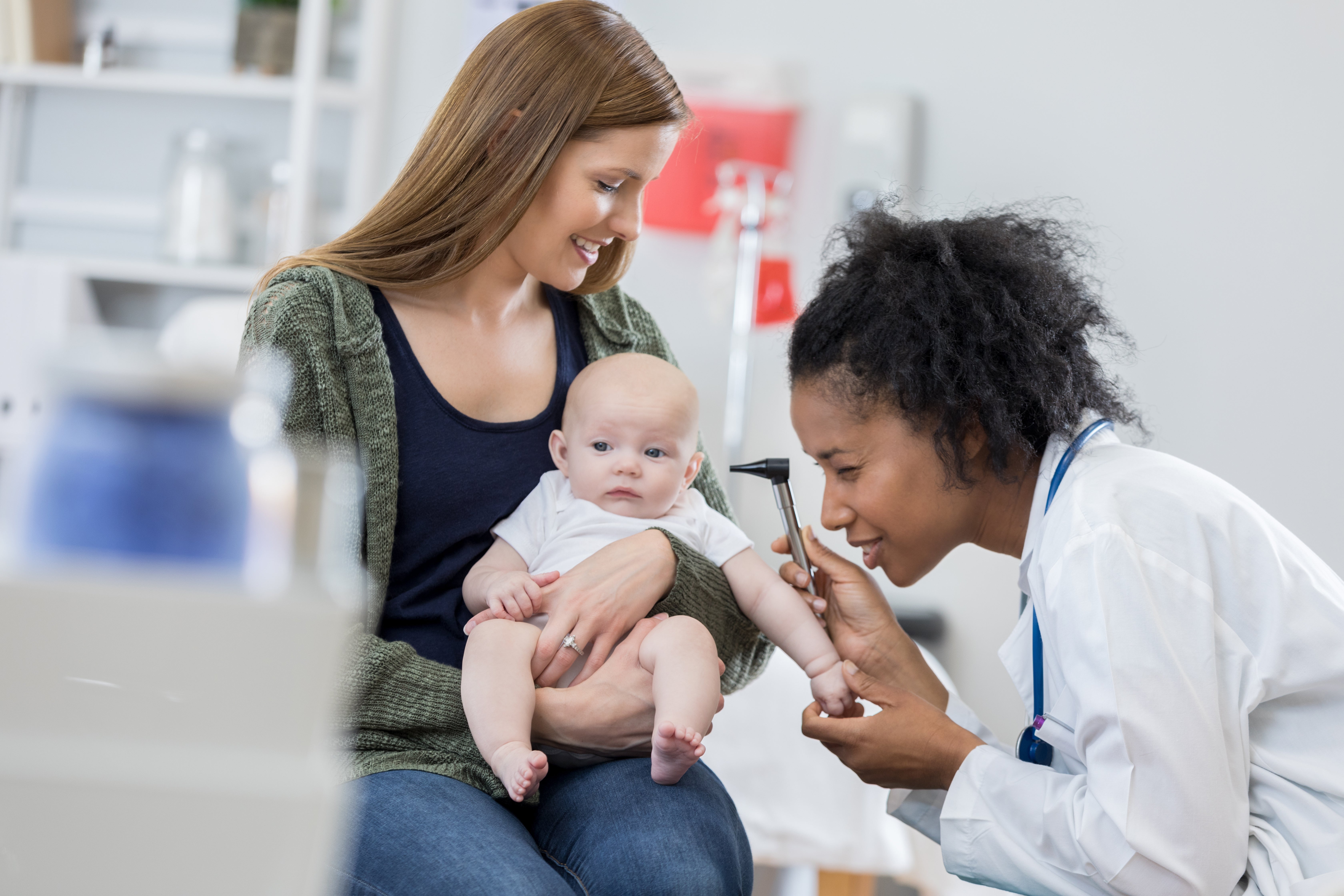
When should your child's hearing be tested? Sooner than you think.
All states have laws or voluntary compliance programs requiring hearing tests in newborns. These are often done before babies leave the hospital. Every year, about 2 or 3 out of 1,000 babies are born with hearing problems in the United States.
For years, routine hearing tests took place only when children entered school. But hearing loss can cause serious problems much earlier. And hearing problems affect language and speech development.
During the first 6 months, babies begin to recognize the spoken sounds that are critical for developing language. Poor hearing can slow down that progress for both speaking and reading.
Which child is at risk?
Think about having your child tested for hearing loss, especially if they have any of these risk factors:
- Born early (premature birth)
- Spent more than 5 days in neonatal intensive care
- History of severe yellowing of eyes and skin (jaundice) needing a blood transfusion
- Infections in you or your newborn
- Meningitis or history of brain injury that needed a hospital stay
- Family history of childhood hearing loss
- Family history of certain hereditary or congenital syndromes, such as neurofibromatosis, Down syndrome, osteopetrosis, and Usher syndrome
Even if your baby has no risk factors, you should be alert to hearing problems. You may notice the following signs of hearing loss in your baby:
- Doesn't react to loud noises.
- After 6 months, doesn't turn toward sounds.
- By 12 months, doesn't say single words.
- Doesn't turn head when called by name.
In your young child, you may notice delayed speech development or unclear speech.
Repeated ear infections, which are common in young children, can also delay language development. A newborn can pass a hearing test and still have hearing problems later in childhood. So even if your baby had normal hearing exams, be alert for the above symptoms. If you notice them, contact your child's doctor right away.
Hearing tests in babies
Your baby is likely to have one of these painless, quick, and sensitive tests:
- Auditory brainstem responses. Sound is introduced to the baby's ears through tiny earphones while the baby is sleeping. Using sensors attached to the baby's head, the test records electrical activity made by the auditory nerve and brainstem when it's stimulated by this sound.
- Otoacoustic emissions. The normal ear makes faint acoustic signals. These are sometimes called inner-ear echoes. People can't hear their own sounds from their inner ear. But tiny, sensitive microphones placed in the ear canal during the screening can measure the echo responses. Babies who do not have an echo response may have hearing loss.
Hearing tests in children
Your child's doctor may check your child's hearing with a simple device called a tuning fork. Or your child may have tests from a hearing specialist (audiologist). Tests include the two discussed above and:
- Pure tone audiometry. This test checks hearing at different decibels or sound levels.
- Tympanometry. This test is often used to check hearing in children with ear infections.
Other hearing evaluation tests may include:
- Speech audiometry. This test checks the spoken word.
- Behavioral testing. This is done for children who can't be tested with other methods.
Featured in
Author: Ignite Staff
Online Medical Reviewer: Ashutosh Kacker MD
Online Medical Reviewer: Tara Novick BSN MSN
Date Last Reviewed: 09/01/2025
© 2000-2026 The StayWell Company, LLC. All rights reserved. This information is not intended as a substitute for professional medical care. Always follow your healthcare professional's instructions.
Learn More About Health Services at PIH Health
Expert care for every stage of life. Explore the comprehensive services offered at PIH Health.
Explore Services
Get Health Tips & Updates
Sign up for helpful health information, wellness tips and news from PIH Health, delivered straight to your inbox.
SubscribeRelated Articles
How Hearing Aids Can Help Your Child
Hearing aids can help your child hear. Hearing aids work by making sound louder. Hearing aids can be worn at any age.
Types of Hearing Tests for Babies and Children
A look at the different types of hearing tests used for babies and children.
Acute Viral Sinusitis, No Antibiotic Treatment (Child)
A cold or allergy can cause the lining of the nose and sinuses to become swollen. This is called sinusitis.
Ruptured Infected Eardrum (Child)
The infection in your child's eardrum may be treated with antibiotics. The eardrum usually heals completely on its own.
Personalized Care Starts with the Right Provider
Search by specialty, location, and more.
Find A Doctor
Make an Appointment
Your health can't always wait. Schedule an appointment with a PIH Health provider.
Schedule an Appointment
Find a PIH Health Urgent Care Location
Need care today?. Find the nearest PIH Health Urgent Care location.
Find Urgent Care