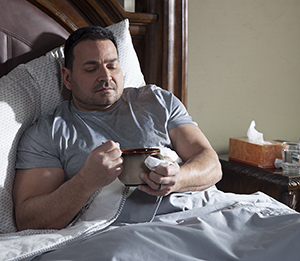
Infections, the flu, and even a cold can cause your blood sugar to rise. Eating less or having an upset stomach (nausea) and vomiting may cause your blood sugar to fall. Creating a sick day plan will help you manage your blood sugar when you get ill.
Planning ahead
To plan ahead before you get sick:
-
Ask your healthcare provider to help you make a sick day plan.
-
Talk with 1 or 2 friends or family members about blood sugar monitoring. Tell them the symptoms that need emergency care.
-
Put together a sick day box with medicines and easy-to-fix foods.
-
Put a printed copy of your sick day plan in the box.
Don’ts
Don'ts include:
-
Don’t stop taking your diabetes medicine without advice from your healthcare provider.
-
Don't take other medicines without advice. Check with your healthcare provider first. This includes medicines such as those for colds or the flu.
Do’s
Do's include:
-
Eating. Stick to your meal plan, if you can. Even if you can't eat your normal diet, you may still be able to eat some saltine crackers or dry toast. If you can’t eat, try fruit juice, regular gelatin, or frozen juice bars if approved by your healthcare provider.
-
Drinking. Drink at least 1 glass of liquid every half hour. If you’re eating, these liquids should be sugar-free and caffeine-free.
-
Checking your blood sugar. Check your blood sugar as often as your provider tells you to do so. You may need to check it more often than normal.
-
Checking for ketones. Check your blood or urine for ketones. Ketones are the waste product from burning fat instead of glucose for the energy your body needs. They are a warning sign of ketoacidosis. Ketoacidosis is a medical emergency that can happen to anyone with diabetes. It is more common with type 1 diabetes. It may also be a problem if you are taking a certain type of medicine for type 2 diabetes. This medicine type is called an SGLT-2 inhibitor.
-
Taking your diabetes medicines.
-
Adjust your insulin based on your sick-day plan. Don't skip insulin. You need insulin even if you can't eat your normal meals.
-
If you take pills for diabetes (oral medicines), take your normal dose unless your provider tells you something different.
-
-
Choosing sugar-free medicines. Look for sugar-free cough drops and other medicines. Ask your provider if it’s OK for you to take these.
-
Getting help. If you're alone, ask someone to check on you several times a day. Have your phone near you at all times.
When to call your healthcare provider
Call your provider or get medical care right away for any of the below:
-
You vomit or have diarrhea for more than 6 hours.
-
Your blood sugar level is higher than normal or more than 250 mg/dL even after you have taken extra insulin (if advised in your sick-day plan).
-
You take oral medicine for diabetes, and your blood sugar is higher than normal or over 250 mg/dL, before a meal and stays that high for more than 24 hours.
-
Your blood sugar is lower than normal or less than 70 mg/dL.
-
You have moderate to large amounts of ketones in your blood or urine.
-
You feel weak standing up. Or you have signs of dehydration, such as dry lips or tongue.
-
You aren’t better after 2 days.
-
You can't stay awake or think clearly.
Online Medical Reviewer: Chris Southard RN
Online Medical Reviewer: Rajadurai Samnishanth Researcher
Online Medical Reviewer: Rita Sather RN
Date Last Reviewed: 04/01/2024
© 2000-2026 The StayWell Company, LLC. All rights reserved. This information is not intended as a substitute for professional medical care. Always follow your healthcare professional's instructions.
Learn More About Health Services at PIH Health
Expert care for every stage of life. Explore the comprehensive services offered at PIH Health.
Explore Services
Get Health Tips & Updates
Sign up for helpful health information, wellness tips and news from PIH Health, delivered straight to your inbox.
SubscribeRelated Articles
Eating Out When You Have Diabetes
Eating right is an important part of keeping your blood sugar in target range. Learn how to make healthy choices when you eat out.
Checking Ketones
Here are images showing how to treat high blood sugar when you have diabetes.
Diabetes: Ways to Take Medicine
A helpful look at the different ways to take diabetes medicine.
Checking Your Blood Sugar
Illustrations to show you how to check your blood sugar.
Personalized Care Starts with the Right Provider
Search by specialty, location, and more.
Find A Doctor
Make an Appointment
Your health can't always wait. Schedule an appointment with a PIH Health provider.
Schedule an Appointment
Find a PIH Health Urgent Care Location
Need care today?. Find the nearest PIH Health Urgent Care location.
Find Urgent Care