Body mass index (BMI) is a way to figure out your weight category. It uses the ratio of your height to your weight. BMI is a measure of your weight that is corrected for height. Knowing your BMI is a way to tell if you are at a healthy weight, underweight, or overweight. The higher your BMI, the greater your risk for weight-related health problems.
What BMI means for adults
-
BMI below 18.5: Underweight
-
BMI 18.5 to 24.9: Healthy weight or ideal body weight
-
BMI 25 to 29.9: Overweight
-
BMI 30 and over: Obese
-
BMI 40 and over: Severe obesity
Use a tool
Find your BMI with an online BMI calculator tool, such as this one from the CDC:
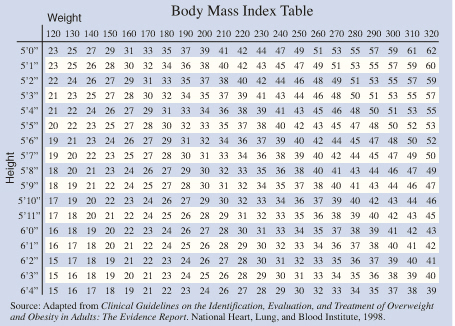
Using the BMI chart
To figure out your BMI, find your height and weight (or the numbers closest to them) on the table below. Follow each column of numbers to where your height and weight meet on the table. That is your BMI.
Featured in
Online Medical Reviewer: Jonas DeMuro MD
Online Medical Reviewer: Marianne Fraser MSN RN
Online Medical Reviewer: Raymond Kent Turley BSN MSN RN
Date Last Reviewed: 07/01/2022
© 2000-2025 The StayWell Company, LLC. All rights reserved. This information is not intended as a substitute for professional medical care. Always follow your healthcare professional's instructions.
Learn More About Health Services at PIH Health
Expert care for every stage of life. Explore the comprehensive services offered at PIH Health.
Explore Services
Get Health Tips & Updates
Sign up for helpful health information, wellness tips and news from PIH Health, delivered straight to your inbox.
SubscribeRelated Articles
Obesity and Its Impact on Health
Obesity can increase your risk for many serious health issues. These include problems with your heart, lungs, blood vessels, brain, and joints.
Deciding on Bariatric Surgery
For the surgery to work, you must change your diet and lifestyle. In most cases, the surgery is not reversible. So if you’re considering surgery, learn all you can about it before you decide.
Bariatric Surgery: Your Surgical Experience
Before surgery, tests will be done to check your health. You will be watched and kept as comfortable as possible throughout surgery and recovery. After surgery, you may stay in the hospital for one or several days.
Discharge Instructions for Bariatric (Obesity) Surgery
This surgery will make it difficult for you to eat a large amount of solid food. After the surgery, you must eat very small meals. Eating too much or too fast may cause unpleasant symptoms, such as nausea.
Personalized Care Starts with the Right Provider
Search by specialty, location, and more.
Find A Doctor
Make an Appointment
Your health can't always wait. Schedule an appointment with a PIH Health provider.
Schedule an Appointment
Find a PIH Health Urgent Care Location
Need care today?. Find the nearest PIH Health Urgent Care location.
Find Urgent Care