Sore throats happen for many reasons, such as colds, allergies, cigarette smoke, air pollution, and infections caused by viruses or bacteria. In any case, your throat becomes red and sore. Your goal for self-care is to ease your discomfort while giving your throat a chance to heal.
Moisten and soothe your throat
-
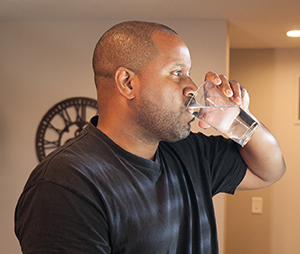
Try a sip of water first thing after waking up.
-
Keep your throat moist by drinking 6 or more glasses of clear liquids every day.
-
Run a cool-air humidifier in your room overnight.
-
Stay away from cigarette smoke.
-
Check the air quality index if air pollution gives you a sore throat. On high pollution days, try to limit outdoor time.
-
Suck on throat lozenges, cough drops, hard candy, ice chips, or frozen fruit-juice bars. Use the sugar-free versions if your diet or medical condition needs them.
Gargle to ease irritation
Gargling every hour or two can ease irritation. Try gargling with one of these solutions:
-
1/4 teaspoon of salt in 1/2 cup of warm water
-
An over-the-counter anesthetic gargle
Use medicine for more relief
Over-the-counter medicine can reduce sore throat symptoms. Ask your pharmacist if you have questions about which medicine to use. To prevent possible medicine interactions, let the pharmacist know what medicines you take. To decrease symptoms:
-
Ease pain with anesthetic sprays. Remember, to prevent a serious condition called Reye syndrome, never give aspirin to anyone 18 or younger. Don't take aspirin if you are already taking blood thinners.
-
For sore throats caused by allergies, try antihistamines to block the allergic reaction.
Unless a bacterial infection is causing your sore throat, antibiotics won’t help you.
Prevent future sore throats
Try these tips to prevent a sore throat:
-
Stop smoking, or reduce contact with secondhand smoke. Smoke irritates the tender throat lining.
-
Limit contact with pets and with allergy-causing substances, such as pollen and mold.
-
Wash your hands often when you’re around someone with a sore throat or cold. This will keep viruses or bacteria from spreading.
-
Limit outdoor time when air pollution is bad.
-
Don’t strain your vocal cords.
When to call your doctor
Contact your health care provider if you have:
-
A fever of 100.4°F (38.0°C) or higher, or as directed by your provider.
-
White spots on your throat.
-
Difficult or painful swallowing.
-
A skin rash.
-
Recent exposure to someone else with strep bacteria.
-
Severe hoarseness and swollen glands in the neck or jaw.
Call 911
Call
-
You have trouble breathing or catching your breath.
-
You are drooling and have problems swallowing.
-
You are wheezing.
-
You are unable to talk.
-
You are dizzy or feel faint.
-
You have a feeling of doom.
Online Medical Reviewer: Ashutosh Kacker MD
Online Medical Reviewer: Rita Sather RN
Online Medical Reviewer: Tara Novick BSN MSN
Date Last Reviewed: 01/01/2025
© 2000-2026 The StayWell Company, LLC. All rights reserved. This information is not intended as a substitute for professional medical care. Always follow your healthcare professional's instructions.
Learn More About Health Services at PIH Health
Expert care for every stage of life. Explore the comprehensive services offered at PIH Health.
Explore Services
Get Health Tips & Updates
Sign up for helpful health information, wellness tips and news from PIH Health, delivered straight to your inbox.
SubscribeRelated Articles
Endoscopic Sinus Surgery
Endoscopic sinus surgery can be done to help clear sinus blockages. Read on to learn more.
Mastoidectomy
Mastoidectomy can remove infected bone and growths from the middle ear. But it may not always improve your hearing in the affected ear. Read on to learn more.
Nasal Surgery: Septoplasty
You're scheduled to have a type of nasal surgery called septoplasty. Read on to learn about what to expect during and after this surgery.
Ossicular Chain Reconstruction: 1 or 2 Bones
This surgery can improve conductive hearing. It can be done to replace a damaged malleus or incus bone.

Personalized Care Starts with the Right Provider
Search by specialty, location, and more.
Find A Doctor
Make an Appointment
Your health can't always wait. Schedule an appointment with a PIH Health provider.
Schedule an Appointment
Find a PIH Health Urgent Care Location
Need care today?. Find the nearest PIH Health Urgent Care location.
Find Urgent Care