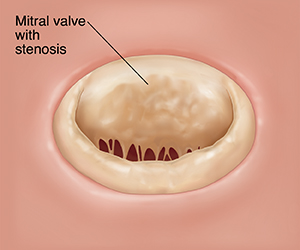
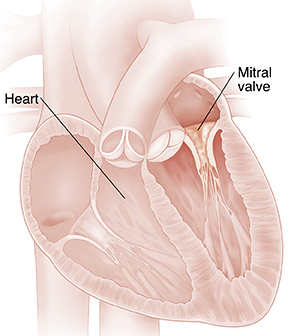
Mitral stenosis means the mitral valve stiffens and doesn’t open all the way. When it can't fully open, blood must move through a smaller opening. In severe cases, it can affect other organs and the rest of the body. Fluid and pressure can build up in the lungs. This can lead to coughing and breathing problems. Problems with the mitral valve can also cause a fast or irregular heartbeat (palpitations). Over time, mitral stenosis may slowly get worse.
Possible causes
Mitral stenosis is most often caused by rheumatic fever. This illness can lead to an inflammation that damages the heart valves. Other causes include mitral valve prolapse and heart defects from birth (congenital). Although pregnancy doesn’t cause mitral stenosis, symptoms may start during pregnancy if undiagnosed mitral stenosis is present. This is because the amount of blood the heart has to move has increased.
Treating mitral valve stenosis
If you don't have symptoms, you usually don't need treatment. If symptoms occur, your health care provider may prescribe medicines to help ease them. If the stenosis is severe, a procedure called balloon valvuloplasty can stretch the opening of the valve for short-term relief.
Heart surgery with valve replacement using either a tissue or mechanical valve is often the best long-term choice to manage this problem.
Online Medical Reviewer: Marianne Fraser MSN RN
Online Medical Reviewer: Rajadurai Samnishanth Researcher
Online Medical Reviewer: Terri Koson DNP RN ACNP
Date Last Reviewed: 02/01/2025
© 2000-2026 The StayWell Company, LLC. All rights reserved. This information is not intended as a substitute for professional medical care. Always follow your healthcare professional's instructions.
Learn More About Health Services at PIH Health
Expert care for every stage of life. Explore the comprehensive services offered at PIH Health.
Explore Services
Get Health Tips & Updates
Sign up for helpful health information, wellness tips and news from PIH Health, delivered straight to your inbox.
SubscribeRelated Articles
Cardiac Amyloidosis
When you have amyloidosis, your body makes too much of certain proteins. These proteins build up and clump together, making a waxy substance called amyloid. When amyloid builds up in the heart, the disease is called cardiac amyloidosis.
What Is Cardiac Asthma?
Cardiac asthma can the same symptoms as true asthma. But the symptoms are caused by heart failure, which leads to fluid buildup in the lungs.
Emotional and Family Issues in Children With Heart Disease
A detailed look at the way children may feel about having congenital heart disease, plus some tips for helping them cope.
Heart Valve Problems: Aortic Insufficiency
Aortic insufficiency means your aortic valve has problems closing. Blood leaks back through the valve. Extra blood may cause the ventricle to stretch. A stretched ventricle doesn't squeeze as well. In time, the heart won't move blood the way it should.

Personalized Care Starts with the Right Provider
Search by specialty, location, and more.
Find A Doctor
Make an Appointment
Your health can't always wait. Schedule an appointment with a PIH Health provider.
Schedule an Appointment
Find a PIH Health Urgent Care Location
Need care today?. Find the nearest PIH Health Urgent Care location.
Find Urgent Care