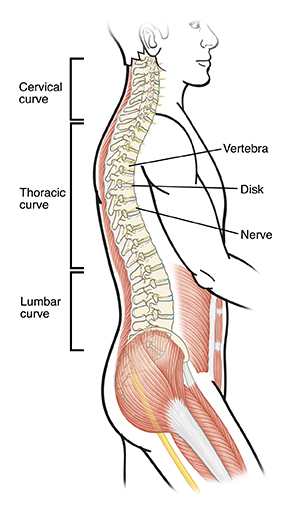
An unhealthy spine often starts with bad habits. Poor movement patterns and posture problems are common causes of back pain. Disk, bone, nerve, and soft tissue problems can all be affected by poor posture. They can lead to pain, stiffness, and other symptoms.
Poor posture backfires
Poor posture can cause pain. Too much slouching puts increased pressure on the disks. An excessive lumbar curve can overload and inflame the vertebrae. As a result, the back muscles may tighten or spasm to “splint” and protect the spine. This adds to the pain you feel.
Correct posture: The key to safe movement
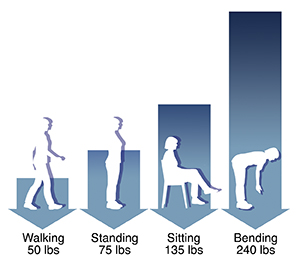
Your spine bears your weight throughout the day. This is true whether you’re sleeping, standing, or bending. Certain positions strain your spine more than others. But by maintaining correct posture in all positions, you can reduce the stress on your spine.
To improve your standing posture, follow these steps:
|
|
Online Medical Reviewer: Louise Cunningham RN BSN
Online Medical Reviewer: Raymond Turley Jr PA-C
Online Medical Reviewer: Thomas N Joseph MD
Date Last Reviewed: 04/01/2024
© 2000-2026 The StayWell Company, LLC. All rights reserved. This information is not intended as a substitute for professional medical care. Always follow your healthcare professional's instructions.
Learn More About Health Services at PIH Health
Expert care for every stage of life. Explore the comprehensive services offered at PIH Health.
Explore Services
Get Health Tips & Updates
Sign up for helpful health information, wellness tips and news from PIH Health, delivered straight to your inbox.
SubscribeRelated Articles
Back Safety: Pushing and Pulling
Pushing can be hard on your back, but pulling can be even harder. So, push rather than pull when you can.
Plaster Splint Care
Here are directions to care for your splint at home.
Wearing a Rib Belt
A rib belt is an elastic strap that may help reduce pain from chest muscle strain or rib fracture.
Back Safety: Sleeping Positions
When you sleep, keep your ears, shoulders, and hips in line.

Personalized Care Starts with the Right Provider
Search by specialty, location, and more.
Find A Doctor
Make an Appointment
Your health can't always wait. Schedule an appointment with a PIH Health provider.
Schedule an Appointment
Find a PIH Health Urgent Care Location
Need care today?. Find the nearest PIH Health Urgent Care location.
Find Urgent Care