The best treatment for you will depend on the type of incontinence you have. Your symptoms, age, and any other problems that are found also affect your treatment. Some types of incontinence may, over time, require surgery. But nonsurgical treatments may work well in many cases. These treatments include lifestyle changes, muscle-strengthening exercises, and medicines.
Nonsurgical treatments
Treatment for stress urinary incontinence includes:
-
Bladder training, such as urinating on a schedule.
-
Lifestyle changes, such as weight loss and increased activity if incontinence is due to being overweight.
-
Medicines, if bladder training has not helped. Medicines may relax the bladder and increase the amount it can hold.
-
Pelvic floor muscle exercises.
-
Medical devices such as a pessary and electrical nerve stimulation.
Lifestyle changes
These changes may include:
-
Losing weight. Excess weight puts extra pressure on the pelvic floor muscles. Exercising and eating right can help you lose weight. This helps other treatments work better.
-
Making certain changes in your diet. Some foods may make you need to urinate more, so it may be good not to have them. These include caffeinated drinks and alcohol. If you have constipation, it can make incontinence worse. In that case, your health care provider may recommend that you eat more fiber. Ask your provider if these or other changes in your diet might be helpful.
-
Quitting smoking. Smoking can lead to a long-term (chronic) cough that strains pelvic floor muscles. Smoking may also damage the bladder and urethra.
Pelvic floor muscle exercises
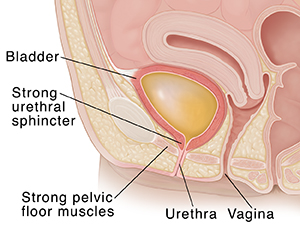
There are exercises you can do to help strengthen your pelvic floor muscles. The pelvic floor muscles act as a sling to help hold the bladder and urethra in place. These muscles also help keep the urethra closed. Weak pelvic floor muscles may allow urine to leak. To strengthen the pelvic floor muscles, do the specific exercises daily as instructed. In a few months, the muscles will be stronger and tighter. This can help prevent urine leakage.
Online Medical Reviewer: Lalitha Kadali
Online Medical Reviewer: Melinda Murray Ratini DO
Online Medical Reviewer: Rita Sather RN
Date Last Reviewed: 01/01/2025
© 2000-2026 The StayWell Company, LLC. All rights reserved. This information is not intended as a substitute for professional medical care. Always follow your healthcare professional's instructions.
Learn More About Health Services at PIH Health
Expert care for every stage of life. Explore the comprehensive services offered at PIH Health.
Explore Services
Get Health Tips & Updates
Sign up for helpful health information, wellness tips and news from PIH Health, delivered straight to your inbox.
SubscribeRelated Articles
Laparoscopic Retropubic Suspension
To help treat stress urinary incontinence, your surgeon may do a procedure called retropubic suspension. This surgery is done through small incisions in the belly. During the surgery, sutures are used to firmly support the pelvic organs and help prevent urine leakage. Below are guidelines to help you get ready for surgery.
Total Cystectomy With Continent Urinary Diversion (Female)
Total cystectomy is surgery to remove the bladder. After the bladder is removed, a new bladder (neobladder) or an internal pouch is made to collect urine. This is called a continent urinary diversion. Learn more about this procedure.
Treating Interstitial Cystitis: Special Therapies and Surgery
Learn about the different types of treatment available to help manage interstitial cystitis.
Understanding Hydrodistention With Cystoscopy
Hydrodistention is a procedure that fills up your bladder with water. It is used to help find out what may be causing your bladder pain. Learn more about the procedure, including why and how it's done and what the risks are.

Personalized Care Starts with the Right Provider
Search by specialty, location, and more.
Find A Doctor
Make an Appointment
Your health can't always wait. Schedule an appointment with a PIH Health provider.
Schedule an Appointment
Find a PIH Health Urgent Care Location
Need care today?. Find the nearest PIH Health Urgent Care location.
Find Urgent Care