There are different kinds of fats in the foods you eat. Fats can be saturated or unsaturated. When choosing fats, try choose unsaturated fats more often than saturated fats. Eating too much saturated fat can raise the risk of heart disease.
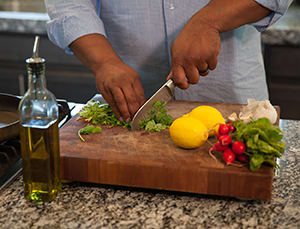
Choose unsaturated fats
Unsaturated fats are usually liquid at room temperature. They are healthier choices than saturated fats. There are two types of unsaturated fats:
- Polyunsaturated fats. These are found in fatty fish such as salmon and trout, as well as walnuts, flaxseeds, sunflower seeds, and vegetable oils such as sunflower, corn, and safflower oil.
- Monounsaturated fats. These are found in avocados, nuts, and oils such as olive, canola, and peanut oil. Some margarines and spreads are made with these oils.
Limit saturated fats
Saturated fats are found in animal-based foods and some tropical oils, such as coconut and palm oil. Eating too much saturated fat can increase your risk of heart disease. Foods high in saturated fat should be limited. Foods that contain a lot of saturated fat include:
- Fatty cuts of meat (lamb, ham, beef).
- Cookies and cakes.
- Cream, ice cream, sour cream, cheese, butter.
- Desserts with butter and cream.
- Sauces with butter and cream.
- Salad dressings with saturated fats.
- Foods that contain palm or coconut oil.
Avoid trans fat
Like saturated fat, trans fat is linked to heart disease. Trans fats are primarily created through hydrogenation, a process that turns liquid oils into solids like hard margarine and shortening. Some animal-based foods have small amounts of naturally occurring trans fats.
The FDA has banned adding partially hydrogenated oils to foods. Partially hydrogenated oils are the main dietary source of artificial trans fat in processed foods.
Online Medical Reviewer: Brittany Poulson MDA RDN CD CDE
Online Medical Reviewer: Diane Horowitz MD
Online Medical Reviewer: Heather M Trevino BSN RNC
Date Last Reviewed: 04/01/2025
© 2000-2026 The StayWell Company, LLC. All rights reserved. This information is not intended as a substitute for professional medical care. Always follow your healthcare professional's instructions.
Learn More About Health Services at PIH Health
Expert care for every stage of life. Explore the comprehensive services offered at PIH Health.
Explore Services
Get Health Tips & Updates
Sign up for helpful health information, wellness tips and news from PIH Health, delivered straight to your inbox.
SubscribeRelated Articles
Discharge Instructions: Adding Medicine to Your Total Parenteral Nutrition (TPN) Solution
Helpful directions and tips for adding medicine to your TPN solution.
Low-Fat Diet
A low-fat diet will help you lose weight. It also can lower cholesterol and prevent symptoms of gallbladder disease. Here's a list of foods to eat more of, as well as those to stay away from.
Eating a High-Fiber Diet
Fiber is what gives strength and structure to plants. Most grains, beans, vegetables, and fruits contain fiber. Foods rich in fiber are often low in calories and fat, and they fill you up more. They may also reduce your risks for certain health problems.
Understanding the Mediterranean Diet
A Mediterranean-style diet is a healthy way of eating, not a specific diet to lose weight. It includes a lot of foods from plants, such as vegetables, fruits, and whole grains, plus olive oil and seafood.
Personalized Care Starts with the Right Provider
Search by specialty, location, and more.
Find A Doctor
Make an Appointment
Your health can't always wait. Schedule an appointment with a PIH Health provider.
Schedule an Appointment
Find a PIH Health Urgent Care Location
Need care today?. Find the nearest PIH Health Urgent Care location.
Find Urgent Care